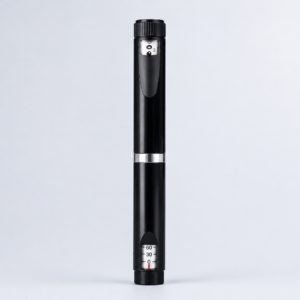
Description
About NAD+
NAD+, or nicotinamide adenine dinucleotide, is an essential cellular coenzyme involved in energy metabolism, oxidation–reduction chemistry and a wide range of regulatory signalling processes.
One of its fundamental roles is the transfer of electrons during metabolism.
NAD+ acts as the oxidised member of the NAD+ / NADH redox pair. During metabolic reactions, NAD+ can accept reducing equivalents and become NADH. NADH can subsequently transfer those electrons into other biochemical systems, including mitochondrial pathways involved in cellular energy production.
This redox cycling makes NAD+ central to processes including glycolysis, the tricarboxylic-acid cycle and mitochondrial respiration.
NAD+ also has a second major biological role that is distinct from electron transfer. It is consumed as a substrate by several families of regulatory enzymes, including sirtuins, poly(ADP-ribose) polymerases (PARPs) and CD38.
Through these systems, NAD+ biology intersects with mitochondrial regulation, protein modification, DNA-damage responses, gene expression, cellular stress signalling and metabolic adaptation.
Together, these characteristics make NAD+ relevant to laboratory studies examining cellular energy metabolism, redox state, mitochondrial function and NAD+-dependent regulatory pathways.
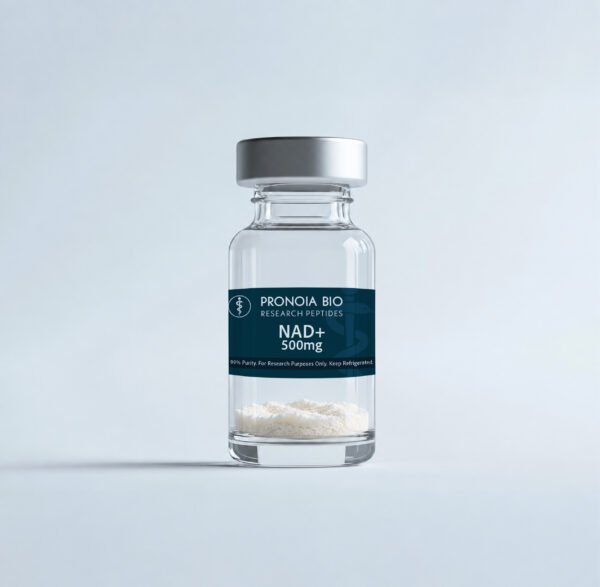
Pronoia supplies NAD+ in a 500mg research format with batch traceability and supporting documentation available for the supplied material.
Product Specification
Product: NAD+
Full name: Nicotinamide adenine dinucleotide
Strength: 500mg
Material class: Dinucleotide coenzyme
Oxidation state: Oxidised NAD form
Redox pair: NAD+ / NADH
Research pathways: Glycolysis, TCA-cycle metabolism, mitochondrial respiration, sirtuins, PARPs and CD38
Research focus: Cellular energy metabolism, redox regulation, mitochondrial biology, DNA-damage responses and NAD+-dependent signalling
Form: Solid research compound
Pronoia minimum purity standard: ≥99%
Batch traceability: Maintained
SKU: PB-NAD-500
Testing & Batch Documentation
Pronoia maintains a structured quality, testing and traceability process for NAD+, with supporting documentation retained for the supplied research material.
- Batch-tested research material
- Pronoia minimum accepted purity standard of ≥99%
- Full batch traceability
- Batch-separated and labelled inventory
- Physical inventory routinely reconciled with digital stock records
- Temperature-controlled cold storage
- Certificate of Analysis (COA) and Safety Data Sheet (SDS) documentation available
The applicable Certificate of Analysis should be treated as the authoritative reference for the chemical form, identity, purity and analytical results reported for an individual batch.
Research Context
NAD+ is one of the central coenzymes linking cellular metabolism with regulatory signalling.
Its research importance comes from two major and interconnected functions: participation in oxidation–reduction reactions and use as a substrate by NAD+-consuming enzymes.
NAD+ / NADH redox cycling and energy metabolism
NAD+ acts as an electron acceptor during numerous metabolic reactions.
When NAD+ accepts reducing equivalents it is converted into NADH. NADH can subsequently donate those electrons into other biochemical reactions before being oxidised back to NAD+.
This continual cycling is fundamental to cellular energy metabolism.
NAD+ / NADH participates in pathways including:
- Glycolysis
- Pyruvate metabolism
- The tricarboxylic-acid (TCA) cycle
- Fatty-acid oxidation
- Mitochondrial oxidative phosphorylation
- Broader cellular redox regulation
Within mitochondria, NADH generated during nutrient metabolism supplies electrons to the respiratory chain.
This creates an important connection between cellular nutrient metabolism, mitochondrial electron transport and ATP-producing bioenergetic systems.
The relative availability of NAD+ and NADH can therefore influence both metabolic reaction rates and the oxidation–reduction environment within cellular compartments.
Mitochondrial biology
NAD+ has an especially important role in mitochondrial metabolism.
Reactions within the TCA cycle reduce NAD+ to NADH, while mitochondrial electron transport subsequently oxidises NADH back towards NAD+ as electrons are transferred through the respiratory chain.
This cycling supports the electrochemical processes associated with oxidative phosphorylation and cellular ATP production.
Research involving mitochondrial NAD biology has examined:
- Electron-transfer reactions
- TCA-cycle metabolism
- Oxidative phosphorylation
- Mitochondrial redox balance
- Metabolic adaptation to changing energy demand
- Mitochondrial stress and homeostasis
NAD pools are also compartmentalised across mitochondria, cytosol and nucleus, and current research increasingly examines how differences between these cellular NAD pools influence metabolic and signalling responses.
Sirtuin signalling
NAD+ is not only a redox coenzyme.
It is also consumed as a substrate by the sirtuin family of NAD+-dependent enzymes.
Sirtuins modify proteins through deacylation reactions and participate in research involving:
- Metabolic regulation
- Mitochondrial function
- Stress-response signalling
- Gene-expression and chromatin regulation
- Circadian biology
Because sirtuin enzyme activity requires NAD+, changes in cellular NAD availability can influence these regulatory systems.
This relationship has contributed substantially to research examining links between cellular metabolism, stress responses and age-associated changes in biological regulation.
PARPs and DNA-damage responses
Poly(ADP-ribose) polymerases, or PARPs, represent another major family of NAD+-consuming enzymes.
PARP enzymes use NAD+ during ADP-ribosylation reactions and are studied extensively in relation to DNA-damage detection and repair-associated signalling.
Following particular forms of DNA damage, PARP activity can increase and consume cellular NAD+ as part of the resulting signalling response.
This creates an important experimental connection between:
- Cellular NAD availability
- DNA-damage signalling
- ADP-ribosylation
- Genomic-stability research
- Cellular stress responses
Competition between NAD+-consuming systems, including PARPs and sirtuins, has become an additional research area examining how cellular NAD pools are allocated between metabolic and regulatory processes.
CD38 and NAD turnover
CD38 is another important NAD-consuming enzyme.
It converts NAD+ into signalling-related metabolites and participates in cellular NAD turnover and calcium-associated signalling.
Experimental research into CD38 has examined its relationship with:
- NAD+ consumption
- ADP-ribose and cyclic-ADP-ribose metabolism
- Calcium signalling
- Immune-cell biology
- Age-associated changes in cellular NAD metabolism
Together with sirtuins and PARPs, CD38 helps illustrate why NAD+ should be understood not simply as an energy cofactor but as part of a wider network connecting metabolism with cellular signalling.
Cellular ageing and stress research
NAD+ metabolism has also become an important area of cellular-ageing research.
Experimental studies across multiple tissues and organisms have reported age-associated changes in NAD+ availability and in the activity of NAD-dependent pathways.
Research has therefore investigated relationships between NAD metabolism and:
- Mitochondrial function
- DNA-damage responses
- Cellular stress resistance
- Sirtuin activity
- Metabolic homeostasis
- Age-associated cellular dysfunction
This research should not be interpreted as demonstrating that isolated NAD+ material produces an established anti-ageing or longevity effect.
Much of the wider NAD literature investigates endogenous cellular NAD metabolism, genetic manipulation of NAD pathways, or NAD precursors such as nicotinamide riboside and nicotinamide mononucleotide rather than direct exposure to isolated NAD+ itself.
Findings from those systems should therefore not automatically be treated as equivalent effects of the research material supplied by Pronoia.
Together, the evidence makes NAD+ particularly relevant to experimental research examining energy metabolism, cellular redox state, mitochondrial biology, DNA-damage signalling and NAD-dependent regulatory enzymes.
These findings do not establish clinical efficacy, safety or suitability for human or veterinary use.
Storage & Handling
NAD+ should be stored according to the conditions specified by Pronoia and the applicable batch documentation.
Pronoia stock is maintained in temperature-controlled cold storage and organised by identifiable batch prior to dispatch.
The material should be protected from unnecessary exposure to heat, moisture and light and handled using appropriate laboratory procedures.
Because chemical form and physical presentation can vary between supplied NAD+ materials, batch-specific storage and handling information should take precedence over general reference conditions.
UK Delivery
NAD+ is dispatched from Pronoia’s UK stock using tracked delivery.
Current availability and dispatch information are shown directly on the product page, with tracking supplied following dispatch.
Orders are prepared through Pronoia’s established research-product fulfilment process, with applicable delivery conditions remaining subject to Pronoia’s current delivery terms.
Research Use
NAD+ supplied by Pronoia Bio is intended for laboratory research and experimental use only.
It is not supplied for human or veterinary use and should not be treated as a medicine, supplement or consumer healthcare product.
Pronoia does not provide dosage, treatment or administration guidance for this research material.