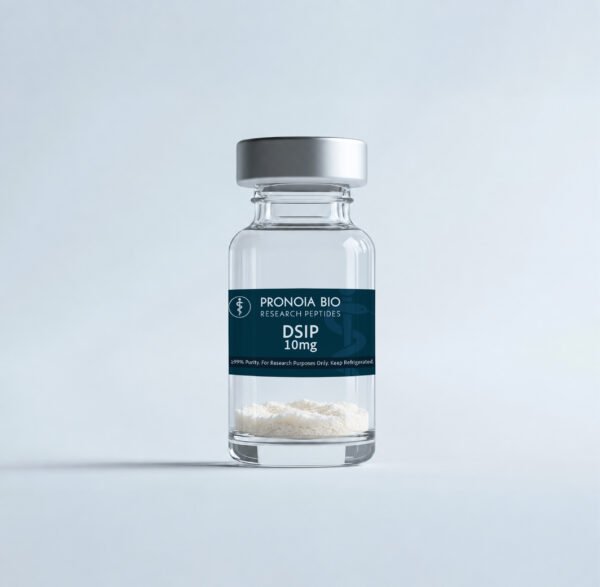
Description
About DSIP
DSIP, or Delta Sleep-Inducing Peptide, is a short nine-amino-acid neuropeptide originally identified during experimental research into sleep-associated electrical activity in the brain.
Its sequence is Trp-Ala-Gly-Gly-Asp-Ala-Ser-Gly-Glu. Early experiments reported changes in delta-wave and sleep-spindle activity — patterns of brain electrical activity associated with particular stages of sleep.
This led to wider investigation of DSIP in experimental models examining slow-wave sleep, sleep onset, sleep architecture and biological rhythms.
Research subsequently expanded beyond sleep itself. DSIP has also been investigated in relation to neuroendocrine signalling, stress-responsive pathways, circadian regulation and interactions between neural and hormonal systems.
Importantly, DSIP does not have one universally established biological mechanism. Published research has produced variable results across different species, experimental designs and human studies, making it particularly relevant to research examining the complexity of short-peptide regulation rather than a single established biological effect.
Pronoia supplies DSIP in a 10mg lyophilised research format with batch traceability and supporting documentation available for the supplied material.
Product Specification
Product: DSIP
Full name: Delta Sleep-Inducing Peptide
Strength: 10mg
Peptide class: Neuropeptide / nonapeptide
Peptide length: 9 amino acids
Sequence: Trp-Ala-Gly-Gly-Asp-Ala-Ser-Gly-Glu
Research focus: Slow-wave sleep, sleep architecture, biological rhythms and neuroendocrine signalling
Form: Lyophilised solid
Pronoia minimum purity standard: ≥99%
Batch traceability: Maintained
SKU: PB-DSIP-10
Testing & Batch Documentation
Pronoia maintains a structured quality, testing and traceability process for DSIP, with supporting documentation retained for the supplied research material.
- Batch-tested research material
- Pronoia minimum accepted purity standard of ≥99%
- Full batch traceability
- Batch-separated and labelled inventory
- Physical inventory routinely reconciled with digital stock records
- Temperature-controlled cold storage
- Certificate of Analysis (COA) and Safety Data Sheet (SDS) documentation available
The applicable Certificate of Analysis should be treated as the authoritative reference for the identity, purity and analytical results reported for an individual batch.
Research Context
DSIP was originally characterised during experiments investigating electrical patterns associated with sleep.
In early animal research, synthetic DSIP produced a significant increase in delta and spindle EEG activity under the experimental conditions used. Delta activity is strongly associated with deep non-rapid-eye-movement sleep, while sleep spindles are characteristic electrical patterns occurring during NREM sleep.
This early work established several major areas of DSIP research:
- Slow-wave and delta-associated sleep activity
- Sleep onset and sleep latency
- Sleep efficiency and overall sleep architecture
- NREM and REM sleep organisation
- EEG and electrophysiological responses
- Circadian and sleep–wake regulation
DSIP was subsequently investigated in small controlled human sleep studies.
Some early experiments reported changes including shorter sleep onset, increased sleep efficiency, increased total sleep time or alterations in sleep structure under particular experimental conditions.
Other controlled studies produced weaker or non-significant findings. In one double-blind study involving chronic insomnia, objective measurements indicated higher sleep efficiency and shorter sleep latency compared with placebo, but the researchers concluded that the effects were weak and that short-term DSIP administration was unlikely to provide a major therapeutic effect.
The sleep-related evidence should therefore be understood as an evolving and inconsistent experimental literature rather than proof of a single established sleep-promoting mechanism.
Research has also examined DSIP beyond sleep regulation.
Experimental areas have included:
- Neuroendocrine signalling and hypothalamic–pituitary regulation
- Stress-responsive biological pathways
- ACTH and cortisol-related signalling
- Circadian and locomotor patterns
- Neurotransmitter and neuropeptide interactions
- Interactions between sleep, neural activity and hormonal regulation
Human neuroendocrine research has produced similarly mixed findings. One controlled study reported a reduction in circulating ACTH-like immunoreactivity following DSIP exposure without a corresponding change in cortisol, while subsequent research did not reproduce an inhibitory effect on ACTH or cortisol responses under other experimental conditions.
This variability is scientifically important. Rather than supporting a simple single-pathway explanation, the DSIP literature suggests that its observed activity can depend strongly on experimental conditions, species, timing and biological context.
Reviews of the field have consequently described the endogenous role and mechanism of DSIP as unresolved.
Together, these characteristics make DSIP relevant to experimental research examining sleep architecture, slow-wave electrical activity, biological rhythms, neuroendocrine signalling and the broader question of how short regulatory peptides interact with neural and hormonal systems.
The published findings derive from specific laboratory, animal and small human experimental studies. They do not establish clinical efficacy, safety or suitability for human or veterinary use.
Storage & Handling
DSIP is supplied in lyophilised form and should be stored according to the conditions specified by Pronoia and the applicable batch documentation.
Pronoia stock is maintained in temperature-controlled cold storage and organised by identifiable batch prior to dispatch.
The material should be protected from unnecessary exposure to heat, moisture and light and handled using appropriate laboratory procedures.
Where batch-specific storage or handling information is supplied, that information should take precedence.
UK Delivery
DSIP is dispatched from Pronoia’s UK stock using tracked delivery.
Current availability and dispatch information are shown directly on the product page, with tracking supplied following dispatch.
Orders are prepared through Pronoia’s established research-product fulfilment process, with applicable delivery conditions remaining subject to Pronoia’s current delivery terms.
Research Use
DSIP supplied by Pronoia Bio is intended for laboratory research and experimental use only.
It is not supplied for human or veterinary use and should not be treated as a medicine or consumer healthcare product.
Pronoia does not provide dosage, treatment or administration guidance for this research material.