
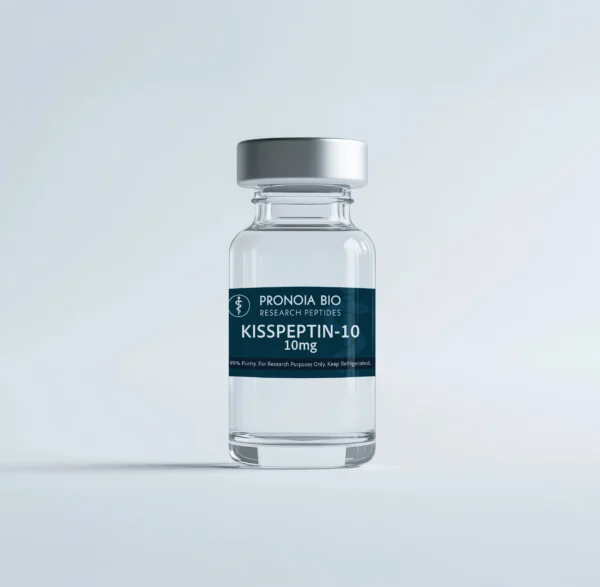
Chemical & physical information
Peptide class: Short neuropeptide fragment
Form: Lyophilised solid
Typical purity: ≥98–99% (analytical method dependent)
Research context
Kisspeptin-10 is widely studied in endocrine and neuroendocrine research, particularly in experimental models investigating:
- Hypothalamic–pituitary signalling pathways
- Peptide-receptor interactions
- Hormonal feedback mechanisms
- Reproductive axis regulation models
Its defined sequence and receptor specificity make it useful for targeted signalling studies in controlled laboratory conditions.
Important handling note (hydrophobic behaviour)
Kisspeptin-10 is hydrophobic in nature. When reconstituted directly with aqueous solutions such as bacteriostatic water, it may aggregate or form a gel-like consistency.
To improve solubility and handling:
- It is common laboratory practice to first introduce 10–20% acetic acid before dilution
- This approach helps maintain peptide solubility and consistency during preparation
- Reconstitution methods should always follow appropriate laboratory protocols and internal SOPs.
Quality & handling
- Supplied as a lyophilised solid for laboratory use
- Analytical purity verified using standard chromatographic techniques
- Batch-specific documentation available
For research use only

Reviews
There are no reviews yet.